
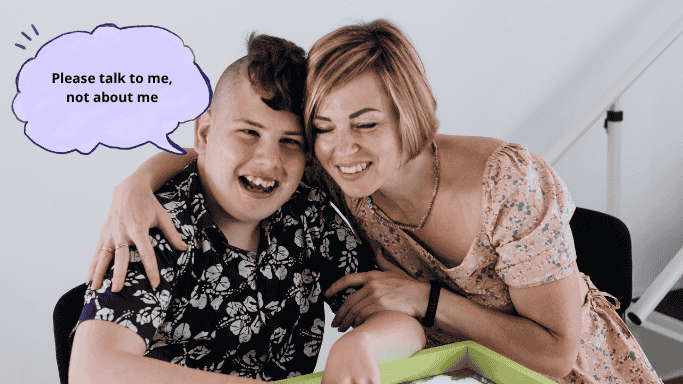
Many people want to do the right thing when they encounter someone with disability in the community. Whether it’s at a café, the supermarket, or a community event, most people genuinely want to be helpful and respectful. However, one small but important change can make a big difference: speak directly to the person, not about them.
It’s common for people to direct questions or conversation to the support worker instead of the person receiving support. For example, someone might ask a support worker, “What would they like to order?” or “Can they pay themselves?” While often unintentional, this can unintentionally exclude the participant from their own interaction.
At the heart of disability support (and particularly positive behaviour support) is the belief that every person has the right to dignity, autonomy, and meaningful participation in everyday life. Behaviour support frameworks emphasise that behaviour is a form of communication and that understanding a person’s needs, preferences, and environment leads to better outcomes and improved quality of life.
Why speaking directly matters
When you speak directly to a person with disability:
You respect their autonomy.
Participants are the experts in their own lives. Speaking to them first recognises their independence and decision-making ability.
You build inclusion.
Small everyday interactions—ordering coffee, asking a question, or making small talk—help create a sense of belonging within the community.
You reduce stigma.
When people see disability as a normal part of everyday life, it reduces assumptions and stereotypes.
Practical tips for everyday interactions
If you encounter someone who may have a support worker with them, try these simple approaches:
1. Address the person first
Instead of asking the worker, ask the participant:
“Hi! What would you like to order?”
2. Be patient
Some people communicate using devices, gestures, or may take longer to respond. Giving space for communication is respectful.
3. Follow the person’s lead
If the participant chooses to involve their support worker, that’s okay. The key is allowing them the choice.
4. Avoid assumptions
Disability is diverse. Some people may need support with certain tasks but be completely independent in others.
A shared responsibility
Creating inclusive communities isn’t just the role of disability providers or behaviour support practitioners. It’s something all of us contribute to through our everyday interactions.
By taking a moment to speak directly to the person in front of you, you help reinforce a culture of respect, inclusion, and dignity. For NDIS participants, these small moments can have a big impact on confidence, independence, and community connection.